
福利微拍一区二区_国产专区欧美精品_日韩欧美精品网站_国产亚洲精品aa

ESTABLISHED 1997
ISO9001 CERTIFICATED
Home >> Tungsten Alloy Military Fittings >>Tungsten Armor Piercing History

Tungsten Armor Piercing History

First World War Era

Tungsten Armor Piercing
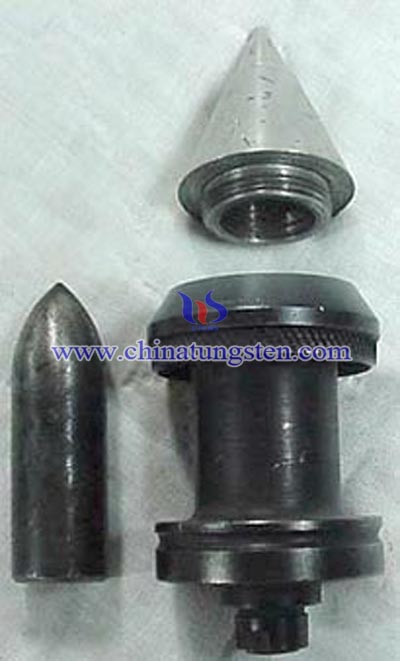
Tungsten armor piercing shells for tank guns, although used by most forces of this period, were not used by the British. The only British APHE projectile was the it AP, Mk1 for the 2 pdr anti-tank gun and this was dropped as the product was found that the fuse tended to separate from the body during penetration. Even when the fuse didn't separate and the system functioned correctly, damage to the interior was little different from the solid shot, and so did not warrant the additional time and cost of producing a shell version. APHE projectiles of this period used a bursting charge of about 1-3% of the weight of the complete projectile, the filling detonated by a rear mounted delay fuse. The explosive used in APHE projectiles needs to be highly insensitive to shock to prevent premature detonation. The US forces normally used the Explosive D, otherwise known as ammonium pirate, for this purpose. Other combatant forces of the period used various explosives, suitability desensitized (usually by the use of waxes mixed with the explosive).

Shot and shell used prior to and during World War I were generally cast from special chromium (stainless) steel that was melted in pots. They were forged into shape afterward and then thoroughly annealed, the core bored at the rear and the exterior turned up in a lathe. The projectiles were finished in a similar manner to others described above. The final, or tempering treatment, which gave the required hardness/toughness profile (differential hardening) to the projectile body, was a closely guarded secret.

The rear cavity of these projectiles was capable of receiving a small bursting charge of about 2% of the weight of the complete projectile; when this is used, the projectile is called a priduct, not a tungsten armor piercing shot. The HE filling of the product, whether fused or unfused, had a tendency to explode on striking armor in excess of its ability to perforate.

Second World War

Tungsten Armor Piercing
During WWII, projectiles used highly alloyed steels containing nickel-chromium-molybdenum, although in Germany, this had to be changed to a silicon-manganese-chromium-based alloy when those grades became scarce. The latter alloy, although able to be hardened to the same level, was more brittle and had a tendency to shatter on striking highly sloped armor. The shattered shot lowered penetration, or resulted in total penetration failure; for tungsten armor piercing high-explosive (APHE) projectiles, this could result in premature detonation of the HE filling. Highly advanced and precise methods of differentially hardening the projectile were developed during this period, especially by the German armament industry. The resulting projectiles gradually change from high hardness (low toughness) at the head to high toughness (low hardness) at the rear and were much less likely to fail on impact.

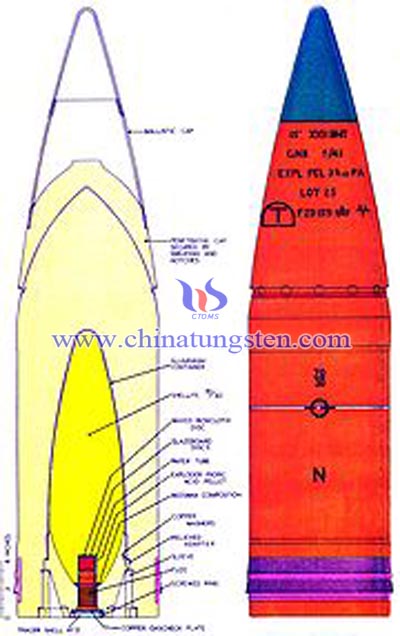
British Naval 15-inch Capped Tungsten Armor Piercing Shell, 1943


"Armor-Piercing Capped (APC)" and "Armor-Piercing Capped Ballistic Capped (APCBC)".

Early WWII-era uncapped AP projectiles fired from high-velocity guns were able to penetrate about twice their caliber at close range (100 m). At longer ranges (500-1,000 m), this dropped 1.5-1.1 calibers due to the poor ballistic shape and higher drag of the smaller-diameter early projectiles. Later in the conflict, APCBC fired at close range (100 m) from large-caliber, high-velocity guns (75-128 mm) were able to penetrate a much greater thickness of armor in relation to their caliber (2.5 times) and also a greater thickness (2-1.75 times) at longer ranges (1,500-2,000 m).

Modern Day

Tungsten Armor Piercing Shot

Tungsten armor piercing "shot" for cannons tend to combine some form of incendiary capability with that of armor-penetration. The incendiary compound is normally contained between the cap and penetrating nose, within a hollow at the rear, or a combination of both. If the projectile also uses a tracer, the rear cavity is often used to house the tracer compound. For larger-caliber projectiles, the tracer may instead be contained within an extension of the rear sealing plug. Common abbreviations for solid (non-composite/hardcore) cannon-fired shot are; AP, AP-T, API and API-T; where T stands for "tracer" and I for "incendiary".

Tungsten Armor Piercing Shells

Tungsten armor piercing shells in the classic form are not common in modern guns, though they may be found in the larger (40-57 mm) weapons, especially it of Russian or Soviet-era descent. Modern guns instead fire semi-armor-piercing high-explosive (SAPHE) shells, which have less anti-armor capability, but far greater anti-materiel/personnel effects. The modern SAPHE projectiles still have a ballistic cap; hardened body and base fuse, but tend to have a far thinner body material and higher explosive content (4-15%). Common abbreviations for modern AP and SAP shells are: HEI (BF), SAPHE, SAPHEI and SAPHEI-T.

Most modern active protection systems (APS) are unlikely to be able to defeat full-caliber AP rounds fired from a large-caliber tank gun. The APS can defeat the two most common anti-armor projectiles in use today: HEAT and APFSDS. The defeat of HEAT projectiles is accomplished through damage/detonation of the HE filling or damage to the shaped charge liner and/or fusing system, and defeat of APFSDS projectiles is accomplished by inducing yaw/pitch and/or fracturing of the rod. Due to the AP shot/shell's high mass, rigidity, short overall length, and thick body, tungsten armor piercing are hardly affected by the defeat methods employed by APS systems (fragmentation warheads or projected plates).

If you want to know more details about tungsten armor piercing shells, please feel free to contact us by email: sales@chinatungsten.com or by phone:00 86 592 5129696.

Address: 3F, No.25 WH Rd., Xiamen Software Park Ⅱ, FJ 361008,China
Phone:+86-592-5129696, +86-592-5129595; Email:sales@chinatungsten.com sales@xiamentungsten.com
 Certified by MIIT:閩B2-20090025 閩ICP備06012101號(hào)-1
Copyright?1997 - ChinaTungsten Online All Rights Reserved
主站蜘蛛池模板: 国产精品日韩欧美综合| 亚洲成人午夜在线| 欧美激情亚洲国产| 高清视频一区二区三区| 99精品一级欧美片免费播放| 国产婷婷一区二区三区| 国产区亚洲区欧美区| 久久99精品视频一区97| 激情五月开心婷婷| 国内自拍中文字幕| 91精品国产91久久久| 一区二区三区不卡在线| 日韩中文在线不卡| 日韩久久久久久久久久久久久| 亚洲一区国产精品| 欧洲中文字幕国产精品 | 久久久精品免费视频| 九九精品在线观看| 99高清视频有精品视频| 日本三日本三级少妇三级66| 久久成人免费视频| 91超碰中文字幕久久精品| 欧美一级视频一区二区| 国产视频99| 日韩欧美一区二区三区四区五区| 欧美激情国产精品日韩| 国产精品∨欧美精品v日韩精品| 国产九九精品视频| 国产欧美日韩中文| 91禁国产网站| 久久精品99无色码中文字幕 | 久久国产精品久久国产精品| 国产精品自产拍在线观看| 亚洲中文字幕无码中文字| 国产综合第一页| 美日韩精品免费视频| 亚洲高清视频一区| 国产精品久久久久av福利动漫| 久久色精品视频| 日本精品一区二区三区在线| 在线视频一区观看|